Monday, May 29, 2023

week seven blog | JohnnyleungDESMA9

Week 7's lecture content on the relationship between neuroscience and art delved into the works of influential academics like Sigmund Freud and Carl Jung, in addition to the drug adventures and research by Aldous Huxley and Timothy Leary (Vesna). In the 20th century, drugs like LSD and cocaine were less strictly regulated than they are now (and even promoted as beneficial and healthy), thus much of the current literature and understanding of these drugs come from this time period.

Image of an advertisement from the Coca-Cola Company. Retrieved from 30 Coca-Cola Secrets You Never Knew | Eat This Not That.

It is in my belief that profound art has origins from extreme emotions, feelings, and thoughts - of which can be produced by hallucinogenic drugs. Moreover, dreams can also represent this state of reality where extremes are pushed, and I question whether there's a specific link between the experiences of these drugs and the dream world. For this reason, I find the research from academics like Leary to be particularly profound.

Photograph of Timothy Leary in 1970. Retrieved from Timothy Leary - Wikipedia

As a Harvard lecturer and researcher, Leary conducted experiments with psilocybin and found that psychedelic drugs could drastically change people's personalities and expand human consciousness (Britannica). For example, in his Concord Prison Experiment, he tried to use psilocybin to reduce recidivism rates in prisoners - to which he found a radical positive association. Anecdotally, I've also heard stories of remarkable habit changes after consumption of hallucinogenic mushrooms -- wherein nicotine addicts, after having taken these drugs, would quit their addiction immediately.

While Leary's research has been contested, I wonder if there is untapped value to these drugs that we aren't looking into due to policy regulations. Hopefully, more research could be done on the effects of these psychedelic drugs to expand the relationship between neuroscience and art (as art relates to the human mind, our thoughts, and our creations). Ultimately, I feel as if Aldous Huxley accurately captured my thoughts on this topic:

Portrait of A. Huxley. Retrieved from National Portrait Gallery
"It's a very salutary thing to realize that the rather dull universe in which most of us spend most of our time is not the only universe there is. I think it's healthy that people should have this experience."

- Moksha: Writings on Psychedelics & the Visionary Experience


Works Cited

Bassano Ltd. Photograph of Aldous Huxley. Bromide print. National Portrait Gallery.

https://www.npg.org.uk/collections/search/portrait/mw52047/Aldous-Huxley

De Maria, Meghan. "30 Cola-Cola Facts You Never Knew." EatThis, NotThat, 5 Dec. 2021,

https://www.eatthis.com/coca-cola-facts/ 

Huxley, Aldous. Moksha: Writings on Psychedelics & the Visionary Experience, edited by Michael 

Horowitz and Cynthia Palmer. https://www.goodreads.com/book/show/5134.Moksha

"Timothy Leary." Britannica, Encylopaedia Britannica, 27 May 2023 last updated, 

https://www.britannica.com/biography/Timothy-Leary

"Timothy Leary." Wikipedia, The Free Encyclopedia, Wikimedia

Foundation, 29 May 2023 last updated,

https://en.wikipedia.org/wiki/Timothy_Leary 

Vesna, Victoria. "Consciousness / Memory." Canvas, Unit 7 View.

https://bruinlearn.ucla.edu/courses/160989/pages/unit-7-view?module_item_id=5946342

Vesna, Victoria. "Neuroscience and art part 2." Canvas, Unit 7 View.

https://bruinlearn.ucla.edu/courses/160989/pages/unit-7-view?module_item_id=5946342

Vesna, Victoria. "Neuroscience pt3." YouTube, YouTube, 16 May 2012, 

https://www.youtube.com/watch?v=E5EX75xoBJ0&ab_channel=UCOnline


week nine blog | JohnnyleungDESMA9

This week's course content largely covered the background and historical progression of space exploration as it relates to humanity's desire to discover. Dating all the way back to Copernicus' heliocentric system (and further back) to the Space Race in the mid-20th century and finally to the modern day privatization of space exploration (Vesna), space as the next frontier has always been on the mind of humans - especially now that the world's lands have been explored and documented.

Photo of a Soviet technician tinkering with Sputnik. Retrieved from Sputnik 1, Earth's First Artificial Satellite in Photos | Space 

Aside from the relationship between the sciences and space exploration, art (especially film and media) have been at the forefront of popular culture since the Space Age. No doubt, films, shows, and books like Stars Wars, Star Trek, H.G. Wells' The War of the Worlds and have played significant roles in producing and popularizing interest in space and the unknown cosmos (Vesna). However, film, media, and art have always progressed in a manner that reflected the era of creation. Westerns, films that reflected an Old American West, often depicted the American west as a vast expanse of unexplored or untamed land (which also often portrayed American Indians as a part of this "unknown", further damaging perceptions and experiences for these communities). The main takeaway from this observation is that the connection between space and art is fundamentally the relationship between the unknown and art and our limitless desire to explore and learn. Always seeking to know, "What's next?"

Artist illustration of the H.G. Wells' The War of the Worlds. Retrieved from The War of the Worlds Posters.
Scene from George Lucas' Star Wars: Episode IV - A New Hope. Retrieved from 25 Perfect Shots From Star Wars Movies – Page 10 (whatculture.com)

Indeed, this question pushes us from the problems and issues concerning today's world, and looks for a solution in the future - in space - off this doomed, floating rock. We may subject Earth and its ecosystems to pollution and destruction, but as long as we feel that the cosmos provides the opportunity and space to thrive, then we can be content with our problematic existence. Wall-E, an animated film from the 2000s, demonstrates this reality of thought and the future implications of our choices as we seek to escape the consequences of rapid-industrialization without limitations. Today, with corporations and billionaires taking interest in space exploration (Chang), it is evident that we must take a serious approach to the privatization of space exploration and the repercussions it has for the vast majority of us. 


Works Cited

Chang, Kenneth. "Bezos Launches to Space, Aiming to Reignite His Rocket Company’s 

Ambitions". New York Times, 20 July 2021,

https://www.nytimes.com/2021/07/20/science/bezos-

blue-origin-space.html

Clements, Samuel. "25 Perfect Shots from Star Wars Movies". WhatCulture, 7 Feb. 2015,

https://whatculture.com/film/25-perfect-shots-from-the-star-wars-franchise?page=9

"Sputnik 1, Earth's First Artificial Satellite in Photos". Space.com, 4 Oct. 2020, 

https://www.space.com/17852-sputnik-space-race-first-satellite-photos.html

 "The War Of the Worlds - Poster". PosterRun, 

https://posterun.com/products/the-war-of-the-worlds-100016323#111

Victoria, Vesna. "8 space pt1 1280x720". YouTube, YouTube, 29 July 2013,

https://www.youtube.com/watch?v=6ZIqTR332l8&ab_channel=UCOnline

Victoria, Vesna. "8 space pt2 1280x720". YouTube, YouTube, 29 July 2013,

https://www.youtube.com/watch?v=hLZMDpoP-u0&ab_channel=UCOnline

Victoria, Vesna. "Space pt4". YouTube, YouTube, 30 May 2012, 

https://www.youtube.com/watch?v=J5ClKO6AJPo&t=5s&ab_channel=UCOnline

Victoria, Vesna. "Space pt6". YouTube, YouTube, 30 May 2012, 

https://www.youtube.com/watch?v=VYmOtFjIj0M&ab_channel=UCOnline


Monday, May 22, 2023

week eight blog | JohnnyleungDESMA9

This week's course content covered nanotechnology as it relates to art, medicine, and commodity production. All of these categories present great opportunities to either learn more about the atomic structure of our world or to help make human lives better (to some extent). Some of the uses for nanotech in "art and science" largely come through how we can use nanoparticles or molecules to produce structure, like through DNA folding or scanning tunneling microscopes. For medicine and commodities, we're specifically looking at solving humanity's ills of cancer, toxins, and microbials, with some intersection with commodities.

Illustration of Drexler's atomic assembly line, retrieved from Nanotech Jim pt1 - YouTube

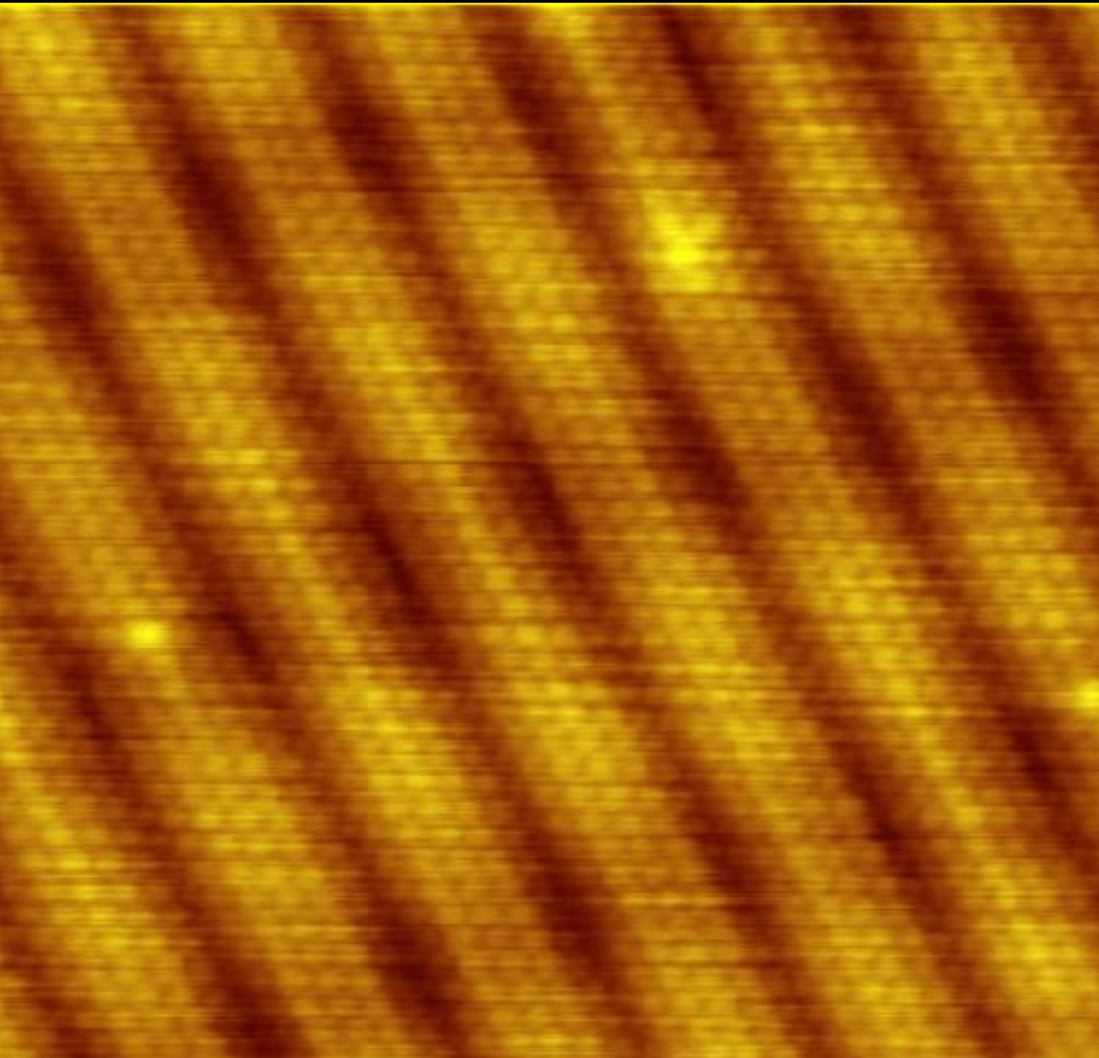
Image of a clean surface of Gold, through a scanning tunneling microscope, retrieved from Scanning tunneling microscope - Wikipedia


One thing that stood out to me was the use of atomic structures to produce images, like smiley faces from Paul Rothemund's Ted presentation or Lisa's manipulation of single carbons monoxide molecules to write UCLA (process was pioneered by Don Igler). In a way, the usage of single-strand DNA to produce structured images and forms reminds me of the Drexel's vision for nanotechnology, where he believed it would be highly mechanical and an avenue for engineering. His belief in an assembly-like structure at the atomic level shares many similarities with the DNA structure production, but most prominently they share the same flaw of being inefficient for use outside art. I mean to say that, as much as these processes can produce art at a scale unimaginable to the natural human perception, it is unlikely they’ll be the catalysts for the production of more complex structures at our scale, unfortunately.

Image of DNA in the form of a smiley-face, through an atomic force microscope. Retrieved from Fun with DNA : NPR, credit to Paul Rothemund


However, there is still significant room for use in the field of medicine, as represented in the videos. The process of using nanotechnology to reduce the toxicity of cancer treatments/medicines and cosmetics (through quantum dots) is promising. Despite this, though, it is tragic that nanotech will be abused by the food and agricultural industries to likely make food products more addictive and personalized. Hopefully, the use of nanotechnology in medicine and art will push humanity forward and the use of nanotech in commodity production, specifically food and ag, will be regulated as to not break us and our environment down.


Works Cited

Gimzewski, Jim. "Nanotech Jim pt1". YouTube, YouTube, 2012 May   

21, https://www.youtube.com/watch?v=q7jM6-iqzzE&t=785s&ab_channel=UCOnline

Gimzewski, Jim. "Nanotech Jim pt4". YouTube, YouTube. 2012, May 

21, https://www.youtube.com/watch?v=yHCuZetAIhk&ab_channel=UCOnline

Gimzewski, Jim. "Nanotech Jim pt6". YouTube, YouTube. 2012, May 

21, https://www.youtube.com/watch?

v=oKlViSKkPd0&list=PL9DBF43664EAC8BC7&ab_channel=UCOnline

Greenfieldboyce, Nell. "Fun with DNA". NPR, 2006 March

15, https://www.npr.org/2006/03/15/5281562/fun-with-dna

Rothemund, Paul. "DNA folding, in detail" Ted, Ted Ideas Worth Spreading, 

2008, https://www.ted.com/talks/paul_rothemund_dna_folding_in_detail?language=en

"Scanning Tunneling Microscope." Wikipedia, The Free Encyclopedia, Wikimedia

Foundation, 2 March 2023 last updated, 

 https://en.wikipedia.org/wiki/Scanning_tunneling_microscope 


Saturday, May 13, 2023

event two blog | JohnnyleungDESMA9

 This week I attended a presentation on the relationship between art and neurology. Much of the artworks focused on producing a material artwork from the unconscious or mental activity from the human brain. Some of the outcomes would be drawings, sounds/patterns, and lights translated from alpha brainwaves through encephalography, or the measure of the electrical activity from the brain.


Artists that produced works based on just the signals from users, like Nina Sobell's Brainwave Drawings or Alvin Lucier's Music for a Solo Performer, presented the audience with either nonsensical compositions or eerie and unsettling emotions from sound. Personally, I found that the sounds produced in these types of projects to be highly uncomfortable. This is not to say the artworks have no value, but that they serve their goal in answering the question, "what if we could see or hear what our brains are doing?" but beyond that, it is hard to find personal connection or relation to these artworks as the viewer. Hopefully, as technology and artwork progress, perhaps we can collect translate and transform the electrical signals from the brain into works that are further from glorified seismograms. 


Alvin Lucier's "Music for Solo Performer" (1965). Retrieved from YouTube.

On the other hand, some artworks like Suzanne Diker's Mutual Wave Machine, felt much more intimate and personal in the way it portrays the connection between humans and our unconscious and conscious states. The Mutual Wave Machine illustrated the brain wave synchronization between two users, often partners, and had lights that correlated to their EEG signals (Diker). Using EEG technology to deepen and highlight interpersonal connections surpasses the academic nature of this artform; much like how Lisa Park's Eunoia II, despite being self-focused, manages to portray the connection between neurology and emotion through physical reality. Her use of speakers and water, in addition to the circular composition of bowls, fully demonstrates how loud our emotions are, figuratively and literally.


Suzanne Dikker's The Mutual Wave Machine. Retrieved from YouTube.


Lisa Park's Eunoia II. Retrieved from YouTube.

Overall, artworks involving encephalography over the past few decades have been evolving - from the technologically limited use of scrambled drawings and unorderly sounds, to the compositions and machines used to illustrate a state of mind and provide a commentary. I look forward to the progression of this artform, as I think it has tremendous potential to deepen our understanding of the mind and body.

Screenshot of registration/attendance, taken by author.

Works Cited

Conceição, Carlos. "Alvin Lucier - "Music for Solo Performer" (1965)", 27 Nov. 2010, 

    https://www.youtube.com/watch? 

    v=bIPU2ynqy2Y&ab_channel=CarlosConcei%C3%A7%C3%A3o

Dikker, Suzanne. "the mutual wave machine", 2013-2019, 

    http://www.suzannedikker.net/mutualwavemachine#background

Dikker, Suzanne. "The Mutual Wave Machine: EYE Amsterdam, 2013", 29 April 2014,    

    https://www.youtube.com/watch?v=buQa-kCT96s&ab_channel=SuzanneDikker

Lucier, Alvin. "Music for Solo Performer", 1982, https://archive.org/details/alvin-lucier 

    -music-for-solo-performer

Park, Lisa. "Eunoia II (Beautiful thought; 아름다운 생각 ll) from Lisa Park", YouTube, 

    YouTube, https://www.youtube.com/watch?v=ZXMXqULrEWg&ab_channel=LisaPark

Park, Lisa. "Eunoia (Version 2)", 2014, https://www.thelisapark.com/work/eunoia2

Sobell, Nina. "Brainwave Drawings", 1972, 

    http://www.ninasobell.com/ninasobell/index_menu.html


Friday, May 12, 2023

week six blog | JohnnyleungDESMA9

This week's lecture content covering Biotech and Art bears a striking resemblance with the content covering medicine and art. Moving forward from the integration of medical technology and biological organisms, biotech and art focuses on change to the genetic composition of living creatures. Some prominent works from artists include Eduardo Kac's GFP Bunny and Edward Steichen's Delphiniums. Artworks within this field raise important ethical questions regarding humanity's impact on the environment around us as a tool for art.

Eduardo Kac's GFP Bunny. Retrieved from GFP Bunny (ekac.org)

Projects concerning animals are almost always controversial due to their inability to consent to our interactions. From hunting for sport to packing as many animals into a farm as possible, the relationship between humans and animals presents a gray area in morality and ethics, and it's up to the individual to draw the line. For example, I believe hunting for sport is unnecessary and cruel, but I am generally okay with the production of meat and animal products. Thus, it is important to consider the notion of harm in these artworks. In Kac's fluorescent bunny, the bunny isn't directly harmed as a result of the modification. However, in Marta de Menezes project on butterfly modification, titled Nature?, holes were artificially produced in the wings, which although likely not hurting the creatures directly, presents a needless and detrimental action between humans and living organisms. Every biotech artwork must be analyzed at an individual level, but largely there should be a set of restrictions on these projects that necessitate that no undue harm is placed on these animals.

Marta de Menezes' Nature?. Retrieved from Nature? – Marta de Menezes.

Overall, the relationship between biotech and art should be treated with caution. While some works, like Steichen's genetically modified flowers, aren't dissimilar from the generations of agricultural artificial selection, works like Menezes genetically modified butterflies pushes the boundaries of human creativity to a space of unnecessary cruelty. Harming or using animals just for the sake of "artwork" is cruel and serves very little material purpose. If it is too remain, it should be heavily regulated and have a strict set of standards that artists must abide by.


Works Cited

De Menezes, Marta. "Nature?", 1999, https://martademenezes.com/art/nature/nature

Kac, Eduardo. "GFP Bunny", 2000, https://www.ekac.org/gfpbunny.html

Steichen, Edward. "Delphiniums", 1 July 1936,

    https://www.moma.org/explore/inside_out/2011/03/08/edward-steichen-archive-delphiniums

    -blue-and-white-and-pink-too/

The Museum For Insects. "Marta de Menezes".    

    https://hypernatural.com/museum/marta_de_menezes.html

Vesna, Victoria. "5 bioart pt1 1280x720", YouTube, YouTube, 18 Sep.

    2013, https://youtu.be/PaThVnA1kyg

Vesna, Victoria. "5 BioArt pt2", YouTube, YouTube, 17 May 2012, https://youtu.be/MdSt-Hjyi2I

    list=PL9DBF43664EAC8BC7

Vesna, Victoria. "5 BioArt pt 5", YouTube, YouTube, 17 May 2012, https://youtu.be/z7zHIdsFS3A

    list=PL9DBF43664EAC8BC7


Monday, April 24, 2023

event one blog | JohnnyleungDESMA9

From the 1st gallery showing of "Cosmological Events," I learned a great deal about our relationship and positionality within space and how we can represent our connection through art. 

One of the main themes I took away from the artworks in the gallery was the sense of triviality and futility of life. In the grand scheme of the universe, we, as human beings, are but specs of space dust formed millions and millions of years ago. Galaxy Orchestra by Output and Our Celestial Bodies by Daniela Brill Estrada both remind the audience of their composition and origin from the cosmos in conjunction with our microscopic position within the vast emptiness.

Our Celestial Bodies by Daniella Estrada. Photo retrieved from https://cosmoselements.art/Artists.

Galaxy Orchestra by Output. Screenshot taken by author on 21 April 2023.

One distinctive trait between cosmological art and other art forms, such as the linear perspective art in Week 2's content, is how much of the human mind and metaphors we must rely on to produce a representation. Because the universe is so vast and the details within are unperceivable to the naked eye, our illustrations of space our dependent on our conceptions of it - not of our physical perceptions of it. We must imagine that which we cannot see. 

This intense use of imagination is seen in cosmological art and abstract art capturing dimensionality. Just as the author of "Flatlands: A Romance of Many Dimensions" wrote about our limitations when it comes to perceiving other dimensions (Abbot). Our perception of space is limited by the technology available to us - thus we can only attempt to recreate space and dimensionality through artworks and the imaginary - unlike the way we can recreate reality through rational perspective (Vesna 00:19:41 - 00:19:52).

For non-astrophotography artworks, like Morning Star by Anna Hoetjes and Biogram Blueprints by Eli Joteva, it is clear that we treat the universe as a mysterious, undiscovered expanse. These works showcase how we use our material world and experiences to illustrate the unknown, as Hoetjes' work draws striking similarities to the jellyfish in the deepest parts of the earth's ocean, and Joteva's work uses terrestrial plants and technology to illustrate the complexity of space and creation.

Morning Star by Anna Hoetjes. Screenshot taken by author on 21 April 2023.


Biogram Blueprints by Eli Joteva. Retrieved from https://cosmoselements.art/Artists.

Overall, the 1st presentation of Cosmological Events was very insightful on the relationship between cosmos and art and helped me develop a greater appreciation for the space I occupy in the universe.

Screenshot of registration/attendance, taken by author.


Works Cited

Abbot, Edwin. "Flatland: A Romance of Many Dimensions." 1884.  

Estrada, Daniella. Our Celestial Bodies. Cosmos Elements. https://cosmoselements.art/Artists.

Accessed 24 April 2021.

Hoetjes, Anna. Morning Star. Cosmological Elements #1 Online Gallery Showing. Retrieved on 21

April 2021.

Joteva, Eli. Biogram Blueprints. Cosmos Elements. https://cosmoselements.art/Artists. Accessed 24

April 2021.

Output. Galaxy Orchestra. Cosmological Elements #1 Online Gallery Showing. Retrieved on 21 April

2021.

Vesna, Victoria."Mathematics-pt1-ZeroPerspectiveGoldenMean.mov" YouTube, YouTube, 9 April 

2012, https://www.youtube.com/watch 

v=mMmq5B1LKDg&t=923s&ab_channel=UCOnlineMathematicspt1-

ZeroPerspectiveGoldenMean.mov


week four blog | JohnnyleungDESMA9


Regarding this week's content on medicine and art, I have had no real experience with medical technologies like MRI or CT scans - for a long period of my life I didn't even have medical insurance so there was no access nor need. However, the works of Eduardo Kac and Ken Warwick were most helpful in helping me understand the relationship between art and medicine.

Photo of Kevin Warwick holding his RFID chip implant (left) and photo of Eduardo Kac (right). Left retrieved from NY Times | Chip Technology Implant. Right retrieved from Kac | Biographical Note.


Kac and Warwick both implanted microchips within their bodies but utilized them for different purposes. Kac used the microchip, alongside other uses, as a time capsule, within it containing family mementos (Kac), while Warwick's chip had material utility to it, as it was linked to access doors and switch lights within his lab, and even later for sending morse code messages to his partner (Vesna 00:06:30 - 00:06:40). On the one hand, Kac utilizes new medical technologies to capture and store his past as photographs, and on the other, Warwick uses similar medical tools to enhance the capabilities of the human body. 

The implications for these microchips in the future are interesting, and perhaps scary. Many science fiction authors and storytellers have displayed how cybernetic implants could alter the way humans interact with each other and the environment around each other. The Cyberpunk universe is a good example of this, as many individuals have the capacity to enhance their human attributes like strength, speed, intelligence, and even knowledge of dancing. Of course, these are fictional works, but the rapid acceleration of medical technologies in the contemporary age could usher in additional avenues for human strife.

Today, one could recognize how the normalization of cosmetic medical operations like plastic surgery can cause further stresses on groups of people by increasing competition. The artist Orlan, who used her face as a canvas to reproduce the most beautiful and revered features of women in history (Vesna 00:07:00 - 00:08:00) demonstrates how we can alter the standard of human art and beauty through medical technologies. Although Orlan's intention wasn't to just capture to the admired features of these women, the notion of improving one's facial features is still conveyed through her work. Thus, from plastic surgery to microchips/implants, medical technology in relation to art is pushing human competition for resources like education, work, and even interpersonal affection/love, which could spell disaster for future generations.

Photo of Orlan before her broadcasted operation. Photograph by Sipa Press/REX/Shutterstock.


Works Cited

Kac, Eduardo. Time Capsule. 1997. Beep/Data Logic, Reus. https://www.ekac.org/timcap.html.

Accessed 24 April 2023.

King-Holmes, James/Science Photo Library. 2019. Kevin Warwick holding a chip implant. Getty

Images. https://www.nytimes.com/2019/05/21/opinion/chip-technology-implant.html. Accessed 24

April 2023.

Sipa Press/REX/Shutterstock. 2016. Photo of Orlan before the cosmetic surgery.

Shutterstock. https://www.theguardian.com/artanddesign/2016/jan/15/orlan-i-walked-a-long-way-for

women. Accessed 24 April 2023.

Vesna, Victoria. "Human Body & Medical Technologies part 3". DESMA9 Bruinlearn Course

Website. https://bruinlearn.ucla.edu/courses/160989/pages/unit-4-view

module_item_id=5946331. Accessed 24 April 2023.

Vesna, Victoria. "Human Body & Medical Technologies part 4". DESMA9 Bruinlearn Course

Website. https://bruinlearn.ucla.edu/courses/160989/pages/unit-4-view

module_item_id=5946331 Accessed 24 April 2023.

event three blog | JohnnyleungDESMA9

This past weekend, I went to the Museum of Jurassic Technology to experience one in-person event shared by the class. Normally, I dislike mu...